

Christmas 2026
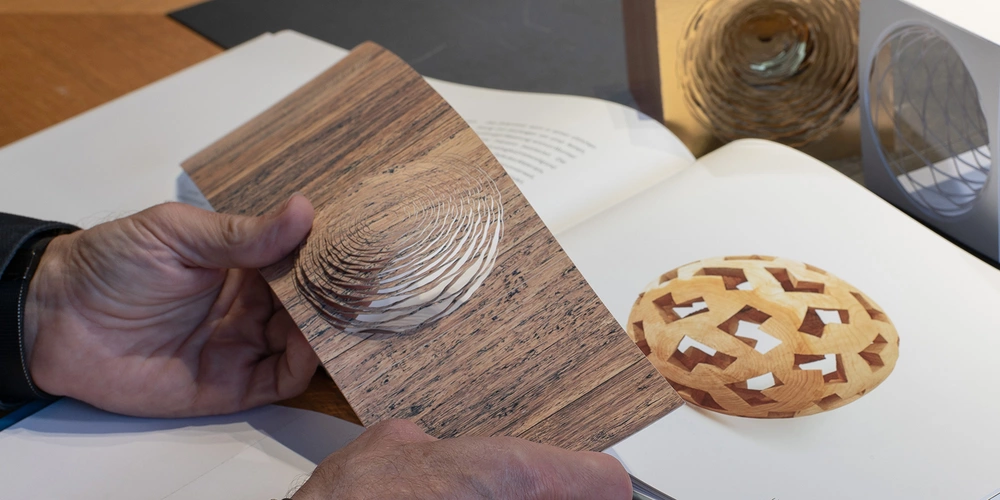
As the year draws to a close, we take time to look back on special projects, new ideas, and the trusted relationships we share with our customers and partners. Inspired by Joseph Stephan Wurmer, this year’s annual greeting card was conceived as a small three-dimensional work of art.
We sincerely thank you for your trust and valued partnership, and wish you a wonderful close to the year and a successful start to the new one.
Art that opens up new spaces
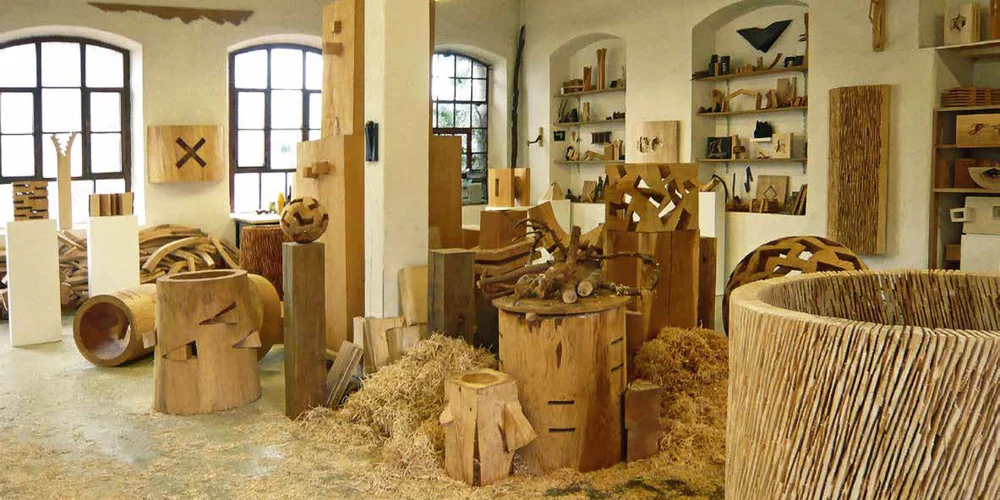
At the heart of this year’s annual greeting card is the work of Fürth-based sculptor Joseph Stephan Wurmer. For the past 17 years, he has exhibited at international art fairs. His work has been featured at venues and in collections including 'art karlsruhe', the Art Collection of the German Bundestag, and the Bavarian State Painting Collections. Working in abstraction and with a clear geometric vocabulary, Wurmer transforms naturally grown tree trunks into sculptures that reveal hidden spaces within the material. His openwork forms combine organic material with structural order, creating a fascinating interplay of light, structure, interior, and exterior.
Another hallmark of Wurmer’s process is his direct approach to shaping wood with band saws and chainsaws. Material is removed, spaces are opened up, and a solid form is transformed into a geometrically structured sculpture. It was precisely this tension between space and form that inspired our 2026 annual greeting card.
From artwork to annual greeting card
Step 1: The design
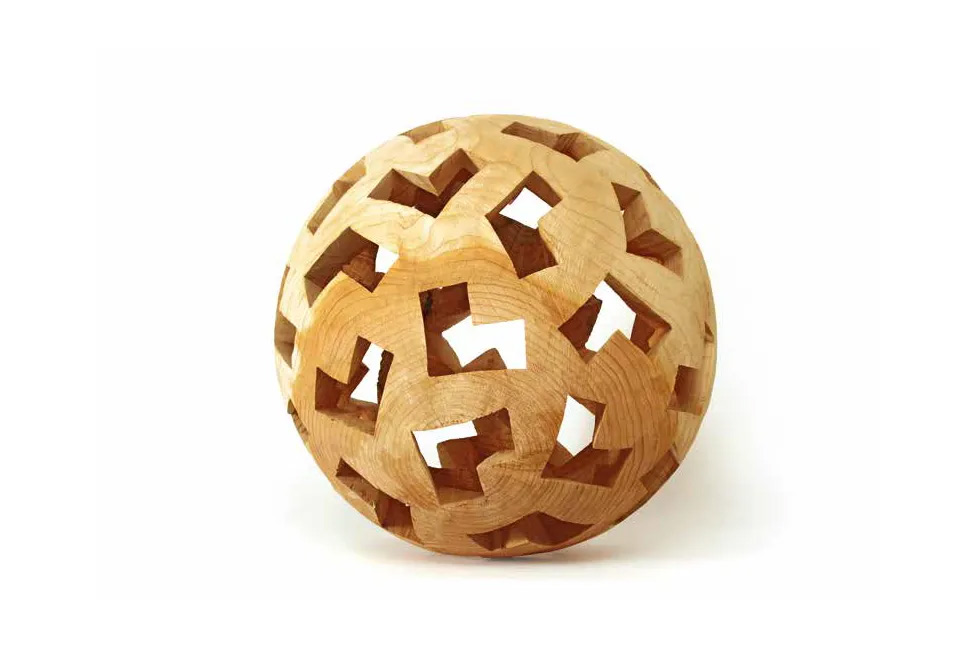
The design begins with Wurmer’s openwork sphere. Its underlying concept evokes internationalism, global reach, and interconnectedness - qualities that also define KURZ. For the card, its structure was reinterpreted. Growth rings and wood grain recall the natural material from which his sculptures originate, while precisely cut openings echo the idea of opening up and revealing what lies within.
Step 2: Printing and cold transfer
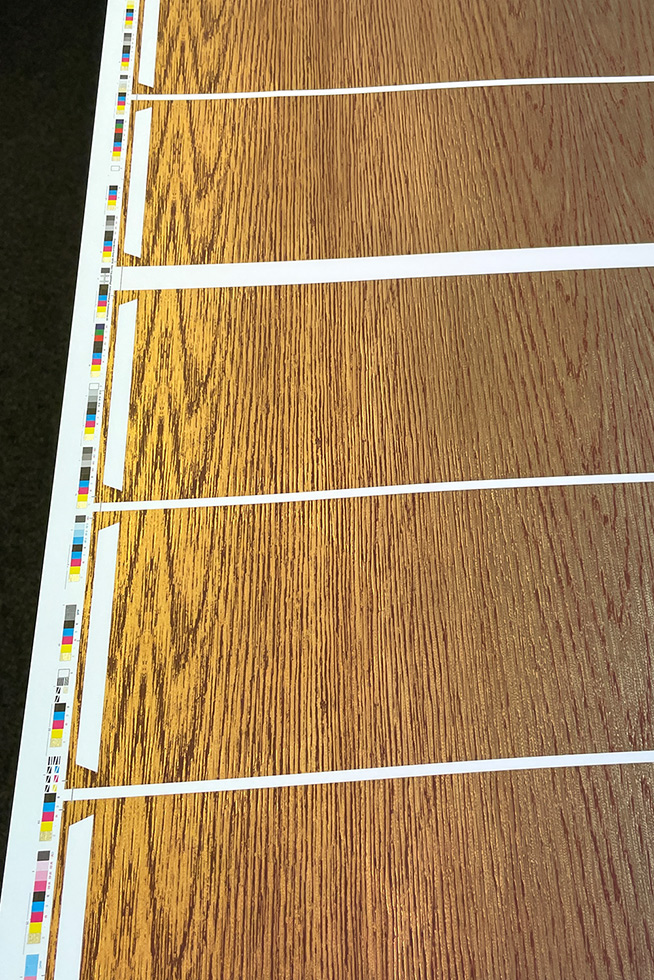
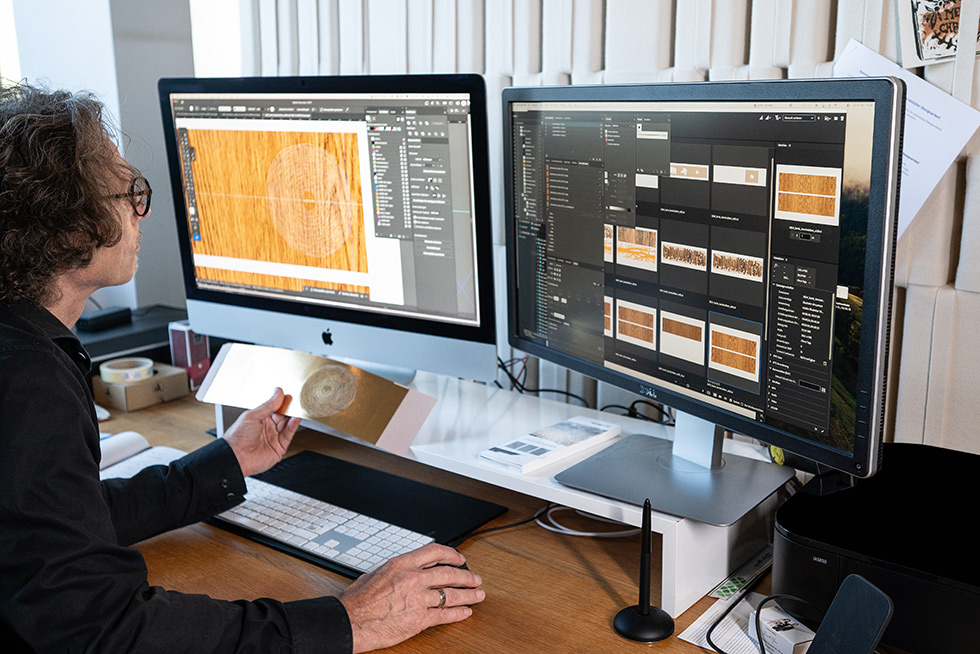
The card is produced in an open format measuring 430 × 105 mm. On the outside, SILVER LINE® Rain is applied using cold transfer technology and then overprinted in four colors, creating the distinctive wood appearance. The inside is enhanced as well, combining KPS Slim applied by cold transfer with four-color overprinting.
Step 3: Texture and depth
An additional blind embossing gives the fine wood grain not only a visual presence but a tactile one as well. The areas that will later be laser-cut to form the growth rings are deliberately left unembossed. This allows the printed design, embossing, and subsequently opened areas to align with precision.
Step 4: Laser precision
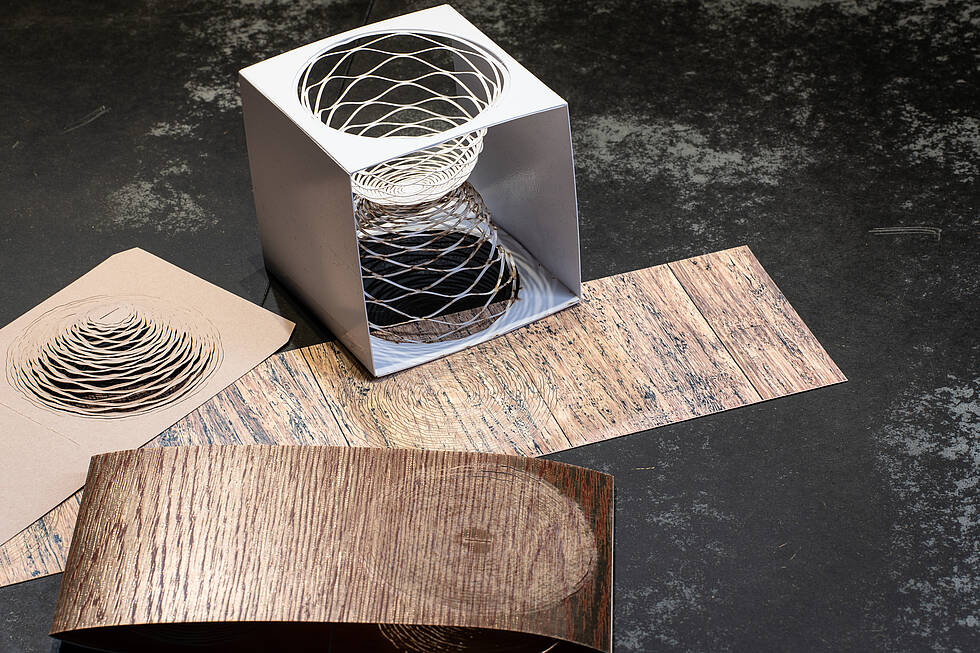
The card’s distinctive three-dimensional effect is created through laser cutting. Delicate growth rings are cut out of the cardstock, while additional laser lines form scoring grooves for the final shaping. After cutting and scoring, the card is glued into place.
Step 5: From cardstock to object
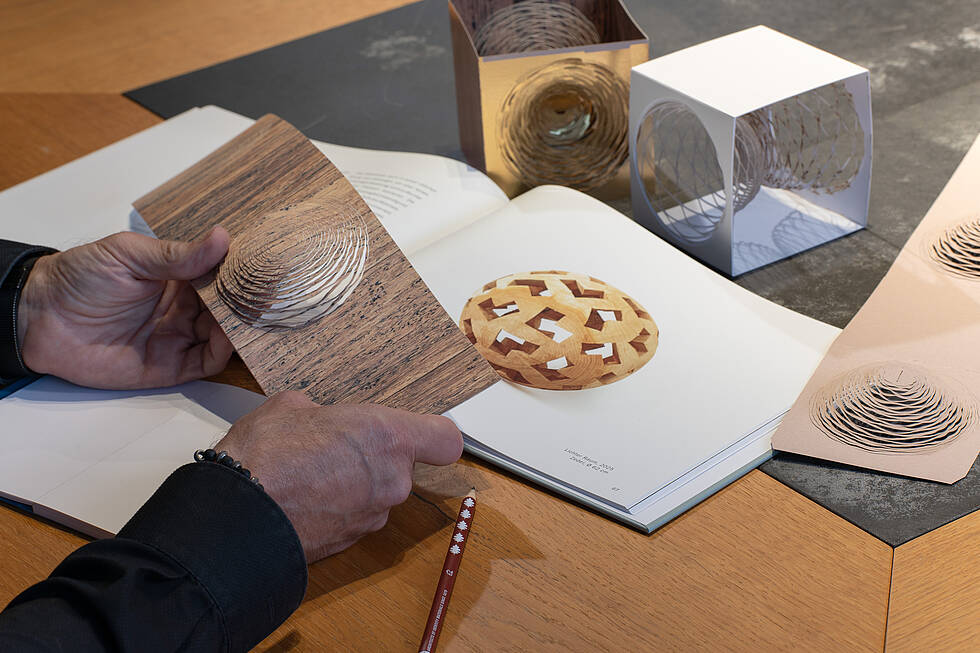
It is only during finishing that the flat card reveals its full impact. Precisely positioned scores and glued sections allow it to be opened into a three-dimensional object. The cut-out growth rings reveal the interior - a design interpretation of Wurmer’s sculptural principle of creating new spaces within a solid material.
